

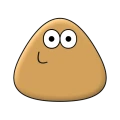
Pou
Zakeh
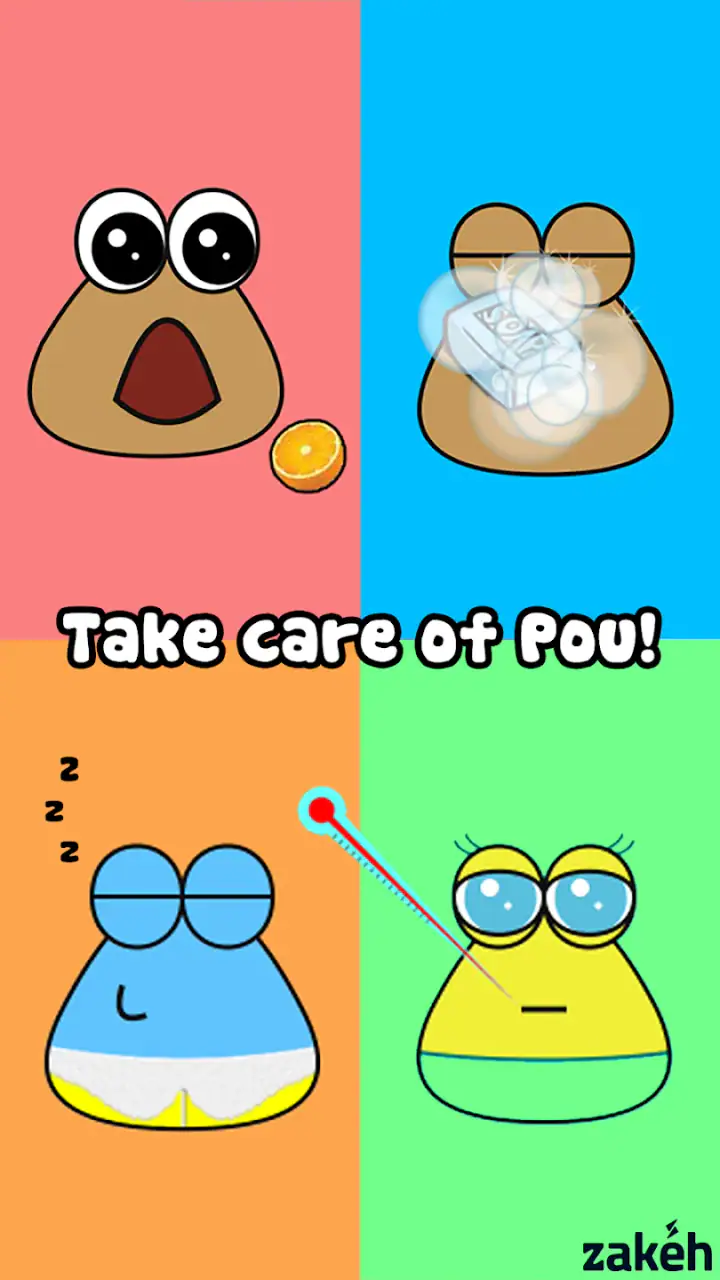
I first approached Pou expecting a very simple virtual-pet game, and that is exactly where its appeal begins. You take responsibility for a small digital companion, respond to its immediate needs, and then come back later to see what still requires attention. The idea is familiar, but the experience works because each action produces a clear reaction. Feed Pou, clean up, play, or adjust its appearance, and the game quickly tells you whether your choice helped.
That straightforward loop makes this a comfortable fit for casual players who want something gentle rather than demanding. It is free to download, suitable for Everyone, and developed by Zakeh. The game has been available since August 5, 2012, yet it still feels easy to understand without a tutorial-heavy opening. I can see why it has reached over a billion installs and an average rating of 4.3 from around twelve million ratings. Those figures do not make it automatically perfect, but they do reflect how broadly the virtual-pet formula connects with people.
How the everyday Pou loop actually feels
The first action is deliberately small
The most important design choice is that the game does not ask me to master complicated controls before I can enjoy it. I can open it, look at Pou, and immediately decide what seems appropriate. That first decision might be taking care of a visible need, entering a small activity, or changing the way the character looks. The response is immediate enough to make the interaction feel personal, even though the underlying idea is simple.
Related News
Discover the Magic of My Talking Angela: Your Virtual Feline Friend
Why My Talking Tom 2: Pet Game is Addictively Fun
This is useful when I have only a short break. For example, if I am waiting for a bus, I can check in, handle one task, and close the game without feeling that I abandoned a long mission. Later, when I have more time, I can stay longer and explore the available activities. The best part of the opening interaction is its low commitment: a session can be brief, but it still feels complete.
That simplicity also makes Pou approachable for younger players. The Everyone content rating matches the uncomplicated tone, and the visual language is easy to read. There is no need to understand a large fictional world or remember a complicated objective. The character itself is the focus, so the game communicates through changes in its condition and appearance rather than through long explanations.
Related News

Why WhatsApp Messenger Still Makes Everyday Communication Feel Easy

Jurassic World: The Game Is the Better Dino Tycoon for Strategic Players

Threads in Real Life: Who Should Join, Lurk, or Leave

How SHEIN Turned Shopping Into an Endless Content Feed

How to Make Fortnite Feel Smarter on Mobile

Should You Switch to Microsoft Outlook on Mobile?
Feedback gives each action a purpose
A virtual pet becomes boring if actions feel disconnected from consequences. Pou avoids that problem by making the connection visible. When I take care of the character, the result is reflected in its ongoing condition. When I ignore it, the next visit has a different feel because there is something to address. This creates a small rhythm: notice, act, observe, and decide what to do next.
I found that rhythm more important than any individual activity. Feeding is not interesting because tapping a food item is mechanically deep; it is interesting because it answers a need. Cleaning has the same role. Games and customization add variety, but they work best when they support the feeling that Pou is a companion rather than a menu of unrelated buttons.
One practical tip is to avoid treating every visit as a checklist that must be cleared perfectly. I get more enjoyment by checking the character first, handling the most obvious need, and then choosing whether I actually want to play. That approach keeps the game relaxing. Trying to optimize every small action can turn a casual pet into another obligation, which is not where this app is strongest.
Gallery
Mini-games provide the reward layer
The activities beyond basic care are important because they give me a reason to remain in the app after the immediate need has been handled. A care-only virtual pet could become repetitive very quickly. By adding playable diversions and rewards, Pou creates a second motivation: I am not only maintaining the character, I am also spending time with it.
The reward is satisfying because it feeds back into the rest of the experience. Progress from play can help me continue caring for Pou or make the next visit feel more worthwhile. This is a modest reward structure, not a deep role-playing system, and that distinction matters. I would not choose this game for strategic complexity, competitive depth, or a long narrative. I choose it when I want a light activity where a few minutes can produce a visible result.
Another useful habit is to alternate between care and play instead of repeating one activity for too long. Taking care of Pou gives the session a clear purpose; a mini-game gives it energy; customization gives it a personal touch. Moving between those parts makes the loop feel less mechanical. It also helps reveal the game’s real strength: no single feature carries the whole experience, but the transitions between them are smooth.
Customization makes the pet feel more personal
Customization is not just decoration here. It changes the emotional reason I return. Once I have chosen a look I like, Pou feels less like a generic object waiting on a screen and more like a small character that belongs to my routine. Even simple visual changes can make repeated check-ins feel different, especially when I use the game casually over time.
This is also where the game can appeal to players who are less interested in traditional games. Someone who does not want fast reflexes or difficult puzzles may still enjoy choosing how a virtual pet looks and checking on its condition. Compared with a typical casual puzzle game, Pou offers more continuity. A puzzle session usually ends when the level ends; here, the next visit is part of the experience.
There is a trade-off, though. Players who prefer a fixed challenge may find customization shallow because it does not replace meaningful progression. The game’s pleasure comes from attachment and routine, not from building a powerful character or completing an elaborate campaign. If I want a clear win condition, a puzzle game or a more structured simulation would probably suit me better.
The reset is what brings me back
The most effective part of the design is the reset between sessions. I can finish a visit after helping Pou, playing for a while, or simply deciding that I have done enough. The game does not need a dramatic ending. Closing it creates a pause, and reopening it later gives me a fresh reason to look again. That is the same action-feedback rhythm in miniature: check the state, make a choice, see the result, and leave until curiosity returns.
A realistic use case is a short evening routine. I might open Pou after dinner, deal with its immediate needs, play one activity, and customize something small before putting my phone away. The session feels finished because I made a meaningful change, but it does not demand that I continue. The next day, the pet’s condition gives me a new starting point rather than simply presenting the exact same untouched screen.
This reset can be either a strength or a weakness. If I enjoy gentle repetition, it creates a comforting habit. If I need constant novelty, the repeated cycle may eventually feel predictable. The game does not disguise that repetition, and I appreciate that honesty. It is a companion loop, not an endless stream of new content.
What the free model means in practice
Pou is free to play, which makes it easy to try without making a financial commitment. There are optional in-app purchases ranging from $0.99 to $24.99 per item. I would recommend deciding early whether I am comfortable with optional spending, especially if customization or extra rewards make the game more tempting over time. The free entry point is a genuine advantage, but the presence of purchases means the experience is not purely separate from monetization.
For a child, I would treat that as a reason for an adult to review purchase settings before handing over the device. The Everyone rating describes the content, not how a family chooses to manage spending. For an adult player, the decision is simpler: enjoy the free loop, and only buy something if it adds enough personal value to justify the cost. I would not spend simply because the game encourages me to keep a routine.
The current version is 1.4.125, and the minimum operating-system requirement is Android 6.0. That makes it accessible on many older Android devices, although actual comfort will still depend on the phone or tablet’s general condition. I would be more cautious on a very old device with limited storage or a crowded system, not because the game is inherently demanding, but because casual apps are most enjoyable when they open quickly and respond without friction.
Where Pou beats the usual alternatives
Compared with a standard match-three or endless-runner game, Pou has a stronger sense of continuity. Those alternatives are better when I want immediate challenge, a score to beat, or a quick burst of reflex-based play. Pou is better when I want the app to remember a relationship-like routine and give me a reason to return after closing it.
Compared with a more elaborate life simulation, Pou is much easier to pick up. There are fewer systems to learn, less pressure to plan, and no need to invest a long uninterrupted session. That is its advantage for children, busy adults, and anyone who likes small interactions. The cost is depth. A larger simulation may offer richer schedules, stories, environments, or long-term decisions, while Pou keeps the focus on care, play, and appearance.
It also differs from a conventional pet-care utility because the game element is always present. I am not merely tracking a virtual creature; I am using activities and rewards to make the routine entertaining. In my experience, that balance is why it remains approachable. It does not ask me to pretend that the digital pet is a full substitute for a real animal, but it does give ordinary check-ins enough feedback to feel worthwhile.
Who should try it, and who should skip it
I would recommend Pou to someone who wants a calm casual game, enjoys collecting a personal routine, or likes the idea of caring for a character without managing a complicated world. It is especially suitable for short sessions, shared family devices, and players who prefer clear visual feedback over instructions and menus.
I would skip it if I need substantial progression, a demanding challenge, competitive multiplayer, or a story that keeps changing. I would also avoid making it my main game if repetitive care tasks feel like chores. The loop is intentionally familiar, and its charm depends on enjoying that familiarity. A player who becomes frustrated by returning to similar needs may prefer a puzzle game with discrete levels or an action title with more varied objectives.
One less obvious consideration is attention. Because Pou rewards checking in, it can quietly become a habit. I get the healthiest experience when I decide what a reasonable visit looks like before opening the app. Handle the urgent care, enjoy one or two activities, and stop while the session still feels pleasant. That keeps the reward loop working for me instead of making the game feel like another notification demanding a response.
My verdict on the complete loop
Pou succeeds because its cycle is easy to feel: I take a small action, receive clear feedback, earn a reason to continue, and then reset the session so returning later makes sense. None of those parts is especially complex on its own. Together, they form a friendly casual game that can fill a few minutes without requiring commitment to a large adventure.
I also think the game’s age is part of its identity. Released in 2012, it belongs to an earlier style of mobile gaming that was comfortable with simple characters, direct interactions, and repeat visits. That can feel refreshing now. It does not try to overwhelm me with systems. Instead, it asks whether I want to check on Pou and do something small.
My recommendation is positive, with the right expectations. This is not a deep simulation and not a replacement for a competitive casual game. It is a free virtual-pet experience from Zakeh built around care, feedback, light activities, and personal style. If that loop sounds comforting, the low barrier makes it worth trying. If you need constant novelty or a strong sense of completion, the same loop may be exactly what sends you looking elsewhere.
After using it, I understand the lasting appeal: the next session begins because the previous one ended cleanly, not because I was forced to finish a mission. That gentle invitation is the game’s strongest feature. Choose Pou when you want a small digital companion and a repeatable routine, not when you are searching for a demanding game.
FAQs for Pou
What is Pou and how does it work?
Pou is a virtual pet app where users can adopt and take care of an alien-like creature named Pou. Players are responsible for feeding, cleaning, and entertaining Pou to keep it happy and healthy. The app includes various mini-games and customization options to enhance the experience and engage users.
Is Pou suitable for children?
Yes, Pou is suitable for children and is designed to be a family-friendly app. It encourages responsibility and creativity as players take care of their pet. However, it's always a good idea for parents to review the app and its content to ensure it aligns with their values and expectations for their children.
Are there in-app purchases in Pou?
Yes, Pou offers in-app purchases. Players can buy coins to unlock various items and customization options for their pet. While these purchases can enhance gameplay, they are not necessary to enjoy the app. It's important for users, especially parents, to be aware of these options to manage spending.
Can Pou be played offline?
Pou can be played offline, allowing users to care for their pet and enjoy most features without an internet connection. However, certain features, such as updates and some social interactions, may require an internet connection to function properly. This makes it convenient for users who are on the go.
How can I customize my Pou?
Players can customize their Pou by changing its appearance, outfits, and room decorations. The game offers a wide variety of options, which can be purchased using in-game coins. These coins can be earned by playing mini-games or purchased through in-app transactions, allowing for extensive personalization.
Pros
- Engaging gameplay for all ages.
- Customizable characters and environments.
- No internet required to play.
- Frequent updates with new features.
- Simple and intuitive controls.
Cons
- In-app purchases can be costly.
- Graphics may feel outdated.
- Repetitive tasks can become boring.
- Limited social interaction options.
- Battery consumption is relatively high.


